
 English
 Portugues
 Pусский
 Français
 Deutsch
 العربية
 ไทย
ไทย Türk dili
 Tiếng Việt


Control remoto de drones de código abierto
Open Source Drone Remote Control: A Comprehensive Overview Open-source drone remote control systems represent a significant advancement in unmanned aerial vehicle (UAV) technology, offering flexibility, customization, and community-driven innovation. Unlike proprietary solutions, open-source remote control platforms allow developers, hobbyists, and researchers to modify, enhance, and adapt drone control software and hardware to meet specific needs. Key Features of Open-Source Drone Remote Control 1. Customizability: Open-source remote control systems provide full access to the source code, enabling users to tailor functionalities such as flight modes, telemetry data display, and control algorithms. This is particularly useful for specialized applications like agriculture, search-and-rescue, or academic research. 2. Hardware Compatibility: Many open-source solutions support a wide range of hardware, including low-cost radio transmitters, flight controllers, and telemetry modules. Popular protocols like MAVLink ensure seamless communication between drones and ground control stations. 3. Community Support: Open-source projects benefit from global collaboration, with developers continuously improving features, fixing bugs, and adding support for new drone models. Platforms like GitHub host repositories where users can contribute code, share modifications, and troubleshoot issues. 4. Transparency and Security: Since the code is publicly available, users can audit it for security vulnerabilities, ensuring safer operations compared to closed-source alternatives where backdoors or weaknesses may go undetected. 5. Cost-Effectiveness: By leveraging open-source software, users avoid licensing fees and can build affordable yet powerful drone control systems using off-the-shelf components. Popular Open-Source Drone Control Platforms - QGroundControl: A widely used ground control station supporting PX4 and ArduPilot flight stacks, offering mission planning, real-time telemetry, and manual control. - Mission Planner: Another robust tool for ArduPilot-based drones, featuring advanced flight planning and diagnostics. - OpenTX/EdgeTX: Open-source firmware for radio transmitters, enabling deep customization of control inputs and telemetry integration. Applications Open-source remote control systems are used in diverse fields: - Research & Education: Universities utilize them for autonomous navigation experiments. - Agriculture: Farmers deploy customized drones for crop monitoring. - Disaster Response: Teams modify control systems for rugged, real-time mapping. Conclusion Open-source drone remote control democratizes UAV technology, fostering innovation through collaboration. Its adaptability, affordability, and transparency make it an ideal choice for enthusiasts and professionals alike, driving the future of drone development.
Producto
Categoría:
-
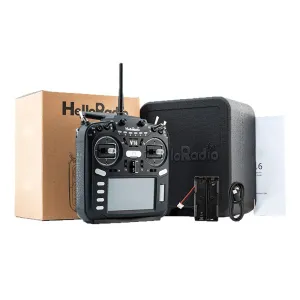
Control remoto de drones de código abierto
Su clasificación: Accesorios para dronesVistas: 594Número:Tiempo de liberación: 2023-04-20 16:46:29El transmisor de radio 4 en 1 V16R ELRS cuenta con un módulo ELRS de 1 W incorporado, cardanes metálicos CNC RDC90, pantalla táctil de 4,3" y frecuencia de 2,4 GHz. Compatible con drones de carreras FPV, drones FPV de fibra de carbono y receptores ELRS convencionales, ofrece potencia ajustable de 1000 mW, asistente de voz AI y 4 opciones de color. Ideal para pilotos competitivos que buscan un control estable y preciso.Descripción general del productoDiseñado para carreras FPV y operaciones profesionales de drones, el transmisor de radio 4 en 1 V16R ELRS ofrece un control ultra confiable y de a...
Noticias
Categoría:
¡Sin resultados de búsqueda!
Caso
Categoría:
¡Sin resultados de búsqueda!
Video
Categoría:
¡Sin resultados de búsqueda!
Descargar
Categoría:
¡Sin resultados de búsqueda!
Reclutamiento
Categoría:
¡Sin resultados de búsqueda!
Productos recomendados
¡Sin resultados de búsqueda!



 Teléfono